LightKilo

Warehouse High Bay Lighting

How to specify LED high bay lighting for warehouses and distribution centers — mounting heights, lux targets, aisle optics, sensors, and recommended fixtures.

Warehouse lighting is a straightforward engineering problem with an expensive failure mode: get the optics or spacing wrong and you either overspend on fixtures and energy, or leave rack faces in shadow and slow down picking.

Start with the racking plan, not the fixture

The single biggest driver of fixture choice is whether you are lighting open floor area or racked aisles:

  • Open floor (staging, cross-dock, assembly): round UFO high bays with 90–120° optics on a regular grid are the most cost-effective option. Wider beams at lower mounting heights, narrower at 12 m and above.
  • Racked aisles: linear high bays with batwing (double-asymmetric) optics aimed down the aisle light vertical rack faces far better than round fixtures. Vertical illuminance is what pickers actually read labels by.

Lux targets that hold up in audits

For most general storage, design to 150–200 lux average at floor level with uniformity (min/avg) of 0.4 or better. Picking and packing zones should reach 300 lux; fine-detail inspection areas 500 lux. Cold storage adds a constraint: verify fixtures are rated for the ambient temperature — standard drivers fail early below -20 °C.

Controls pay for themselves quickly

Warehouse aisles are unoccupied most of the time. Per-fixture or per-aisle PIR sensors that dim to 10–20% (rather than switching off) typically cut lighting energy 50–70% without the relamping stress of hard on/off cycling. If the roof has skylights, daylight dimming compounds the savings. DALI-2 systems make the sensor zoning reconfigurable when the racking layout changes; 0–10V is cheaper and fine for static layouts.

What to look for on the datasheet

  • L70 lifetime ≥ 100,000 h — relamping at height is expensive; fixture life is a labor cost decision.
  • Efficacy ≥ 150 lm/W at the fixture level (not the chip level).
  • 10 kV surge protection if the site has poor power quality or exposed supply.
  • IP65 even indoors — dust sealing keeps optics clean and output stable.
Products to shortlist

Lithonia Lighting · High Bay

CPHB Compact Pro LED High Bay

Power
88–214 W
Output
12261–30498 lm
CCT
4000K / 5000K
Efficacy
143 lm/W

Contractor Select linear LED high bay with 12,000–30,000 lm packages, up to 144 lm/W, glare-control lens, and DLC Premium listing — a stocked one-for-one HID/fluorescent replacement.

Meteor Lighting · High Bay

Dext 3.0

Power
300–500 W
Output
42500–74000 lm
CCT
3000K / 3500K / 4000K / 5000K
Efficacy
148 lm/W

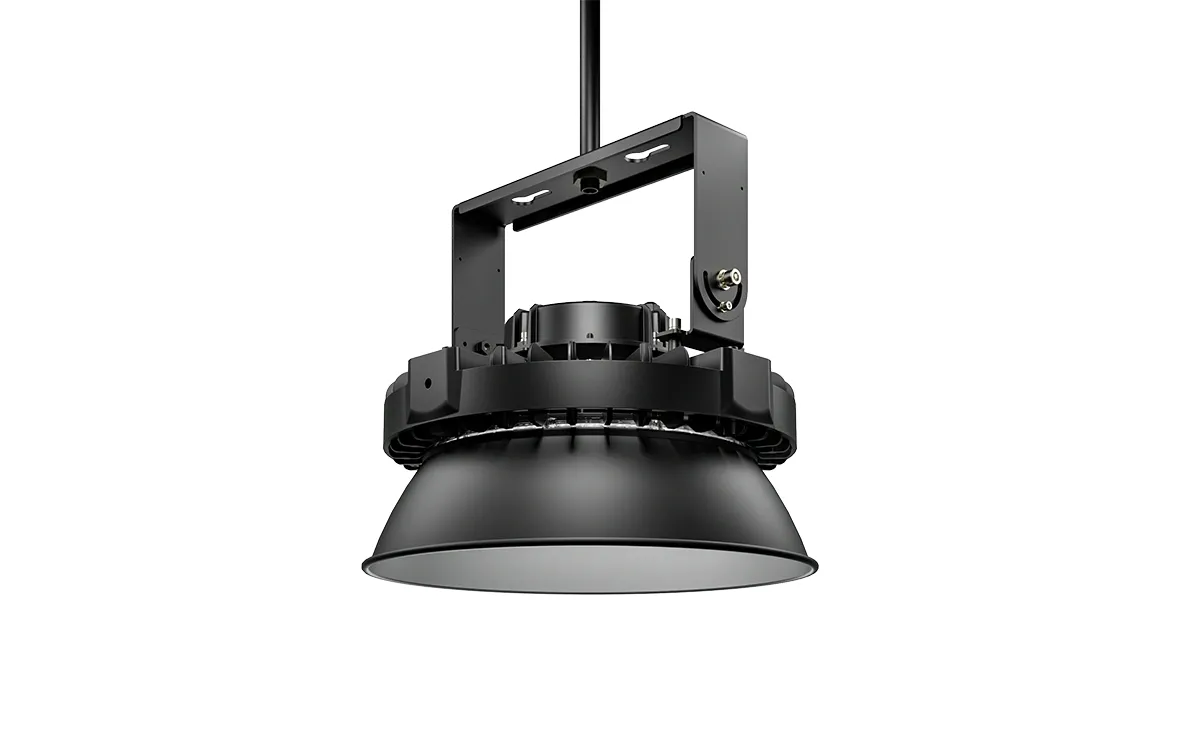
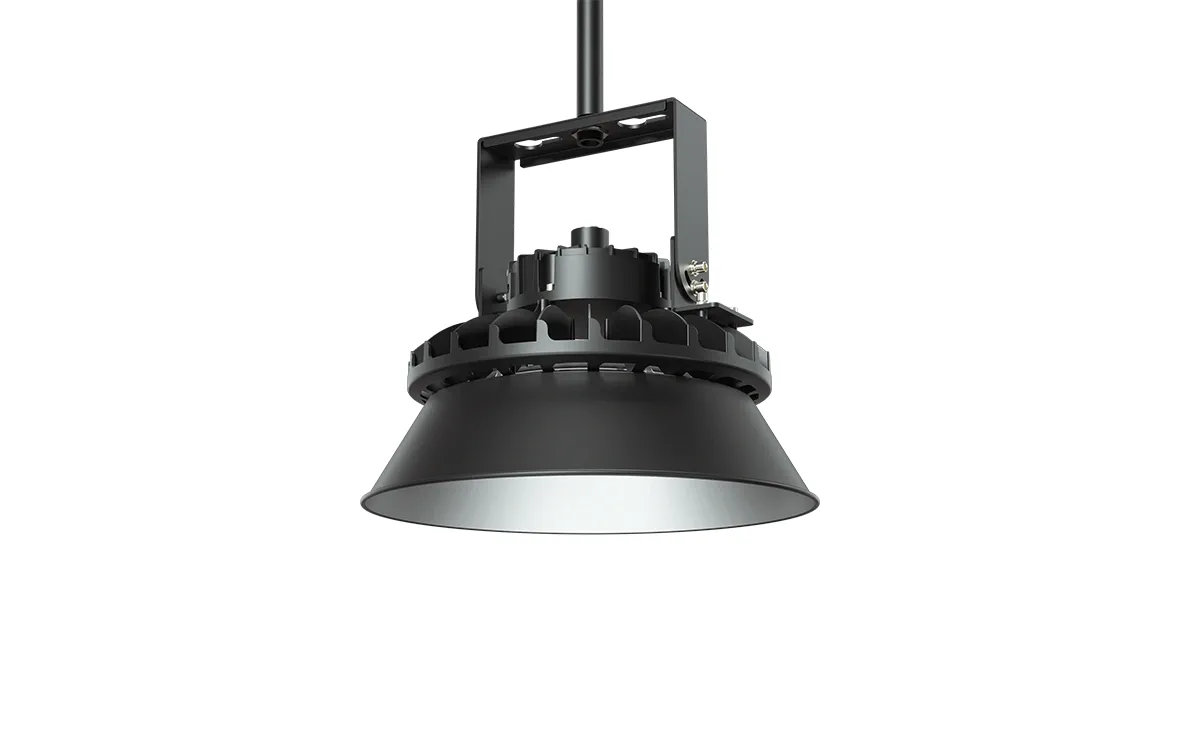
Compact industrial high bay delivering up to 74,000 lm at ~148 lm/W with UGR<19 optics — built for the largest halls, with IK10 wire-guard and IP65 outdoor options.

Meteor Lighting · High Bay

Dext Mini

Power
80–240 W
Output
10000–32620 lm
CCT
3000K / 3500K / 4000K / 5000K
IP
IP65

Compact wet-location high bay in two sizes (10/12) delivering 10,000–32,620 lm from 80–240 W, IP65-rated with IK10 wire-guard and shroud options.

Meteor Lighting · Linear

NovaLink

Power
100–240 W
Output
5630–33610 lm
CCT
3000K / 3500K / 4000K / 5000K
IP
IP66

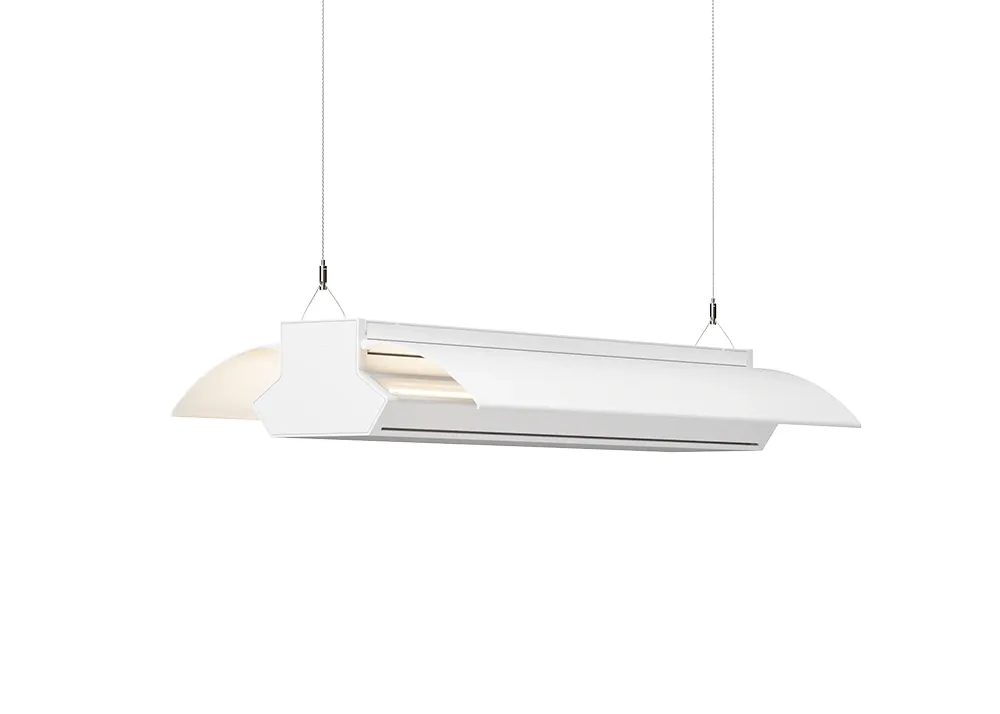
Modular suspended linear infrastructure with built-in illumination — 2 ft/4 ft rails and corners with concealed wiring, direct-uplight/indirect-downlight/hybrid channels, and 5,630–33,610 delivered lumens, IP66 for natatoriums and arenas.

Meteor Lighting · High Bay

Signum

Power
45–195 W
Output
3230–23000 lm
CCT
2700K / 3000K / 3500K / 4000K / 5000K
Efficacy
118 lm/W

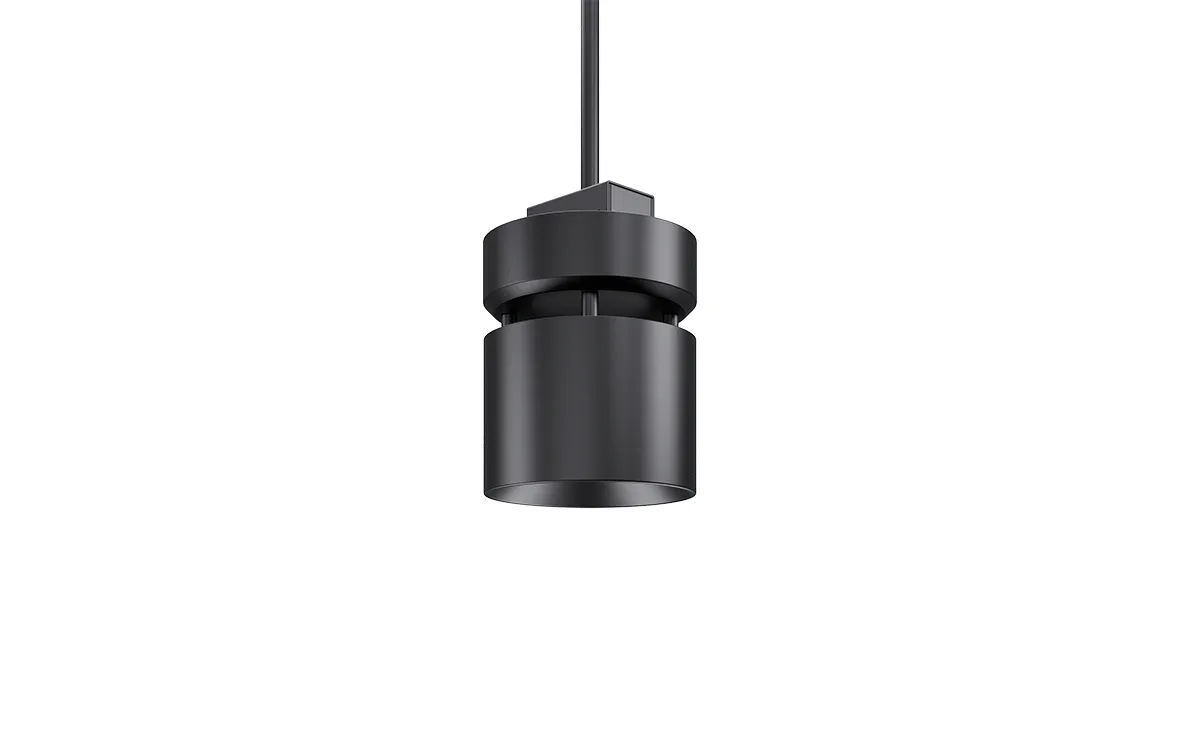
Architectural high-ceiling cylinder family in 8", 10", and 16" apertures, delivering 3,230–23,000 lm at CRI 85 with 0–10V/DMX dimming and stem, cable, surface, or bracket mounting.

Meteor Lighting · High Bay

Tetriss 2.0

Power
200–600 W
Output
16600–60300 lm
CCT
3000K / 4000K / 5000K
Efficacy
101 lm/W

Modular high-ceiling luminaire scaling from 3 to 9 modules for 16,600–60,300 delivered lumens, with 25°/40°/60° optics and 60° rotation / 180° tilt aiming.

Manufacturers to know